
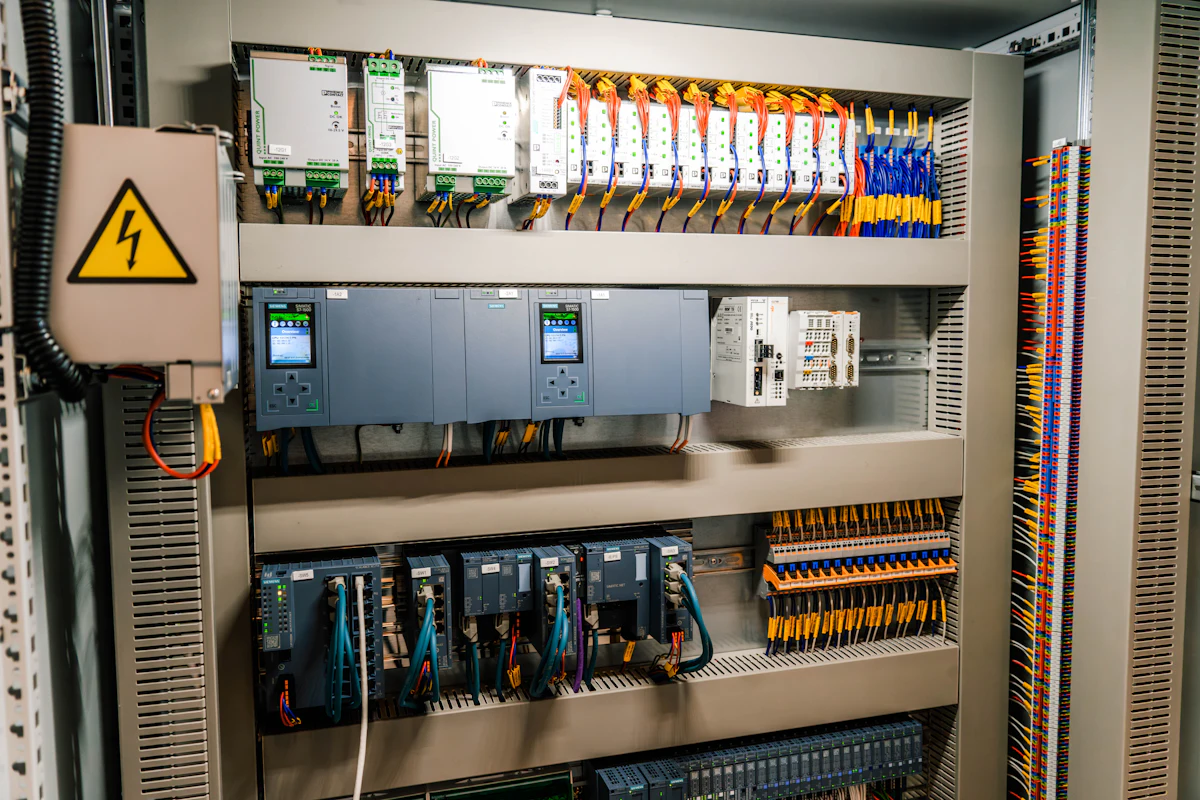
Progressing cavity pumps move thick, shear-sensitive and particle-laden products gently — sauces, fruit preparations, dough, yoghurt. PCM pumps are widely used in food plants for exactly that reason. Their weak point is also their strength: a soft elastomer stator around a hard metal rotor.
Understanding how these two parts wear is the key to predictable maintenance.
How the pump works
A helical rotor turns inside a stator with a double-helix cavity. The cavities move product steadily from suction to discharge. The seal line between rotor and stator is what creates pressure — so any wear immediately reduces performance.
The four main failure modes
- Dry running — the elastomer overheats in seconds. The stator surface becomes hard, cracked or burnt.
- Swelling — the elastomer absorbs product or chemicals, grips the rotor and overloads the drive.
- Abrasion — solids wear the stator surface and the chrome rotor coating.
- Hysteresis damage — excessive pressure or speed heats the stator from the inside.
Most stator failures are not wear — they are dry running. Protect the pump and the stator life often doubles.
Symptoms to watch
- Falling flow at the same speed.
- Rising motor current — often swelling.
- Pressure that will not build.
- Pieces of elastomer in the product or downstream filters.
- Noise and vibration from the drive train.
The drive train: cardan joints and coupling rods
Between motor and rotor sits the drive train that converts rotation into the rotor's eccentric motion. Its wear parts are the cardan joints and coupling rods. Worn joints cause knocking, vibration and eventually damage to the rotor.
Inspect them whenever the stator is changed.
Mechanical seals
The mechanical seal keeps product inside the pump housing. Leaks at the seal often follow dry running or a damaged rotor. Use the seal faces and elastomers specified for your product and CIP regime.
Choosing the stator elastomer
- NBR — general-purpose food products.
- EPDM — hot water and many CIP chemicals.
- FKM — fatty or aggressive products.
- Food-grade compounds with documented compliance for direct product contact.
If stators fail early, check the elastomer selection before blaming quality.
What to keep in stock
For each critical PCM pump:
- One complete stator.
- One rotor (or at least one per pump size on site).
- One mechanical seal kit.
- One set of cardan joints and a coupling rod.
Plants running SPX Flow pumps can add stator kits and APV pump shafts to the same plan.

Five steps to longer stator life
- Fit dry-run protection and interlock it with the motor.
- Run the pump at the lowest speed that meets the duty.
- Match the elastomer to product and cleaning chemistry.
- Flush and drain correctly after CIP.
- Record stator life per pump to spot outliers early.
Need parts or a better pump?
Our spare parts team supplies PCM stators, rotors and drive parts with documented materials. If a pump keeps failing because the duty has changed, our plant engineering service can help re-specify it. See also our filling and capping category for the equipment downstream of your pumps.
Key terms explained
Stator: the elastomer-lined tube with a double-helix cavity inside the pump housing.
Rotor: the single-helix metal shaft that turns inside the stator.
Interference fit: the small overlap between rotor and stator that creates the seal line and pressure.
Cardan joint: the universal joint that transmits drive to the eccentric rotor.
Step-by-step stator replacement
- Isolate, drain and lock out the pump.
- Remove the discharge housing and pull the stator off the rotor.
- Inspect the rotor for coating wear, scoring and diameter loss.
- Check the cardan joints and coupling rod for play.
- Lubricate the new stator with a food-compatible lubricant and push it over the rotor.
- Reassemble, then fill the pump with product or water before starting.
- Run at low speed first and check pressure, current and noise.
Reading a failed stator
A failed stator tells you why it failed. A hard, cracked or burnt surface means dry running. A swollen, soft or sticky surface means chemical incompatibility. Scratches and grooves along the cavity mean abrasive solids. Keep failed stators for a quick review before ordering the next one — it often points to a process fix rather than a part problem.
A worked example from a sauce manufacturer
A sauce manufacturer was replacing stators on one PCM pump every few weeks, while an identical pump on the next line lasted months. The parts were the same, so the team investigated the process.
They found that the first pump often ran for short periods with an empty hopper at the end of each batch. A simple dry-run protection sensor was installed and interlocked with the motor. Stator life increased dramatically, and the cardan joints, which had also been wearing quickly, stabilised.
The lesson: when one pump fails far more often than its twin, look at how it runs before changing suppliers.
Common mistakes to avoid
- Running the pump dry, even for a few seconds at start-up or end of batch.
- Choosing the stator elastomer by price instead of product compatibility.
- Fitting a new stator on a worn rotor.
- Running at maximum speed when a lower speed would meet the duty.
- Ignoring knocking from the drive train until a cardan joint fails.
Key takeaways
- Stators and rotors are the main wear parts of progressing cavity pumps.
- Dry running is the most common cause of stator failure; protect against it.
- Match the elastomer to the product and cleaning regime.
- Inspect cardan joints, coupling rods and mechanical seals with every stator change.
- Keep one stator, rotor and seal kit per critical pump on site.